Price
Brand
Availability
Shop Categories
Transceivers & Modules
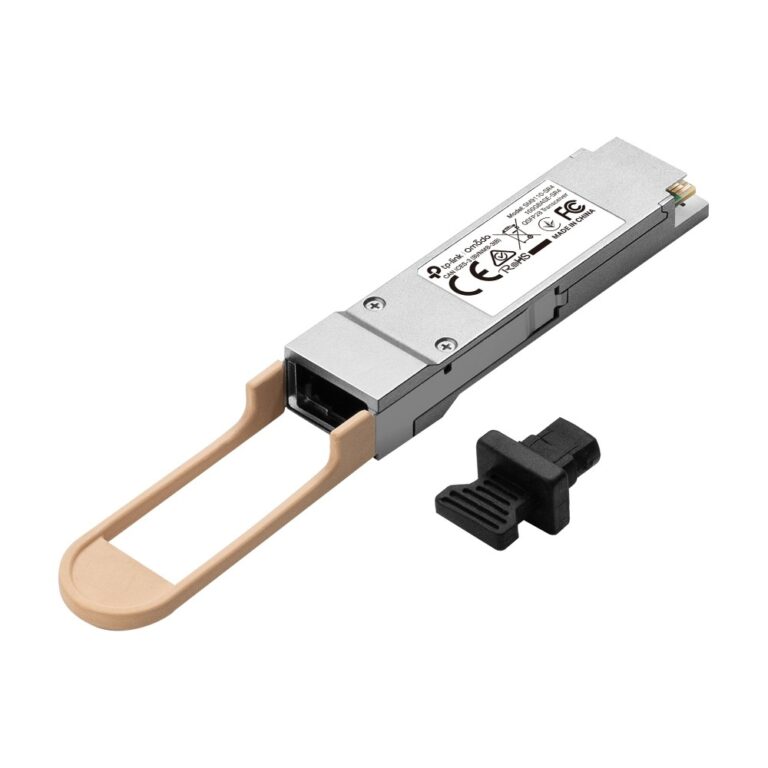
TP-Link Omada SM9110-SR4 QSFP28 Transceiver Module 100G 40G Multi-mode Fibre 850nm MPO 150m
In stock
TP-Link Omada SM6110-LR Fibre Optic SFP+ Transceiver 25780 Mbit/s 10 km 1310 nm Grey
In stock
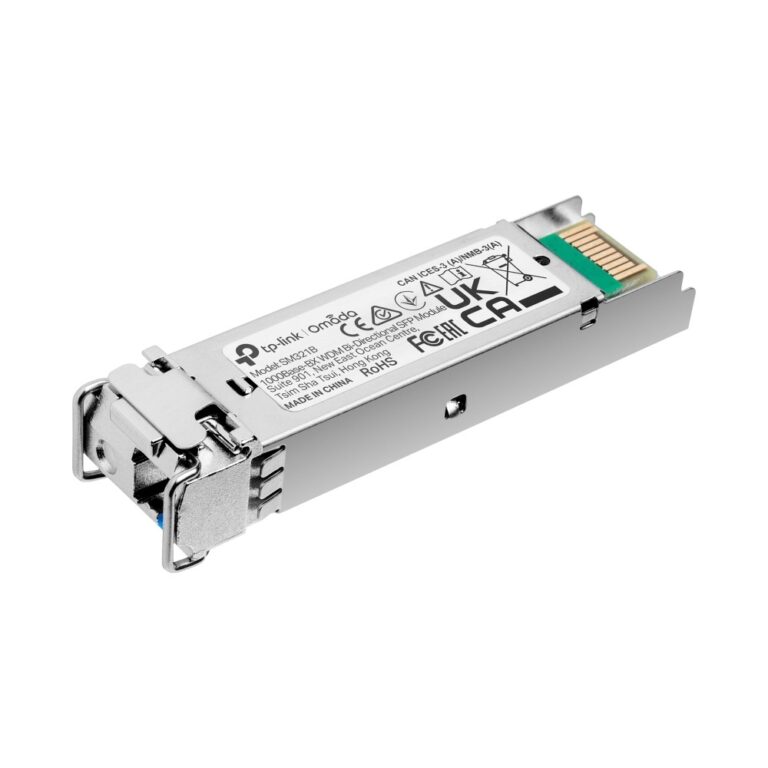
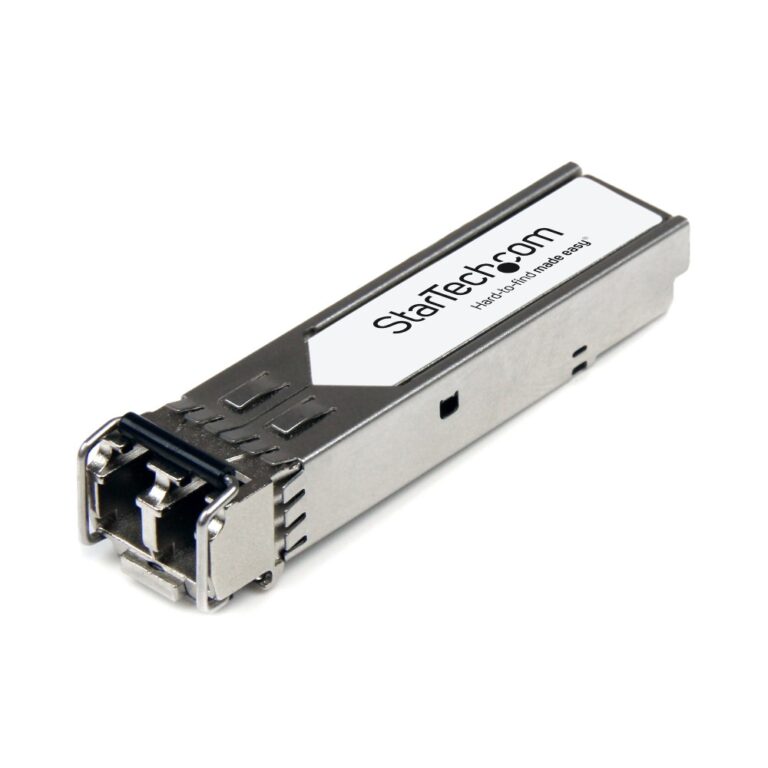
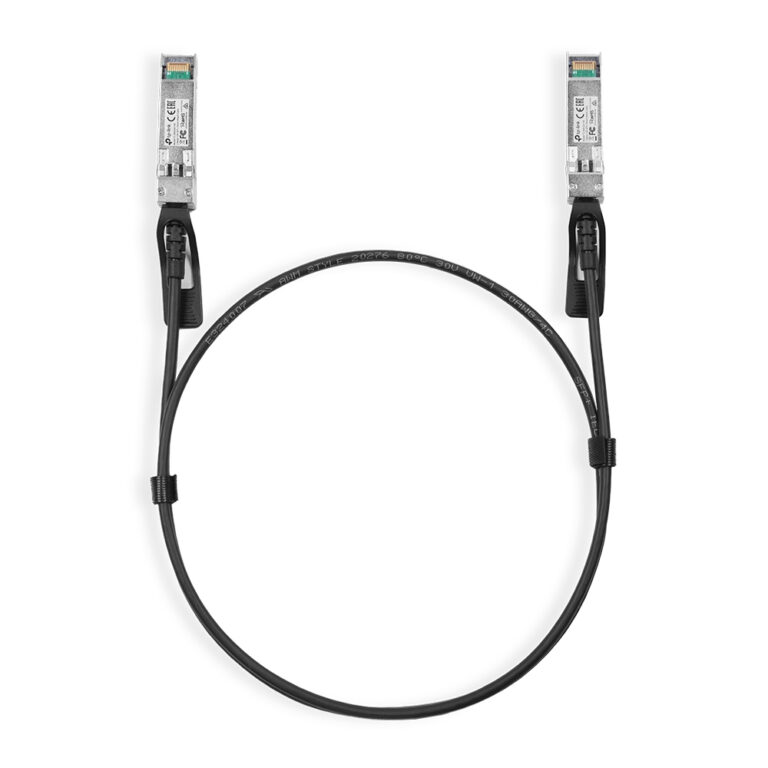
A transceiver is the removable module that plugs into an SFP slot on a switch or router and provides the physical connection — which lets one switch serve copper, short fibre or long fibre depending on what you fit.
Four things have to match.
Slot type. SFP is up to 1Gbps, SFP+ up to 10Gbps, and SFP28 up to 25Gbps. A slower module works in a faster slot; the reverse does not.
Fibre type. Multi-mode (usually OM3/OM4) is for short runs within a building. Single-mode is for long runs between buildings or sites. The fibre and the modules at both ends must agree.
Wavelength and distance. Modules are rated for a maximum run. WDM and BiDi modules send both directions down a single strand, which halves the fibre needed — they must be used in matched pairs.
Switch compatibility. Some manufacturers’ switches only accept their own coded modules. Check before ordering third-party parts.
Media converters bridge fibre to copper where a switch has no SFP slot.
The range covers TP-Link Omada, Ubiquiti and StarTech.

Transceivers & Modules Buying Guide and FAQ
This Transceivers & Modules range covers networking gear. Below are the common questions.
What does this networking product do?
This category covers transceivers & modules that help you build a faster, more reliable home or office network. The right choice depends on your setup, so match it to your broadband, the number of devices and the coverage you need.
Will it work with my existing network?
Most networking gear connects to a standard home network by cable or Wi-Fi. Check the standards and speeds it supports so it keeps up with your broadband and devices, and that it fits how your network is set up.
How do I get the best performance?
Wire your main devices where you can for speed and stability, use up-to-date Wi-Fi (Wi-Fi 6 or 7) for wireless, and place hardware to give even coverage. Gigabit ports are the sensible baseline.