
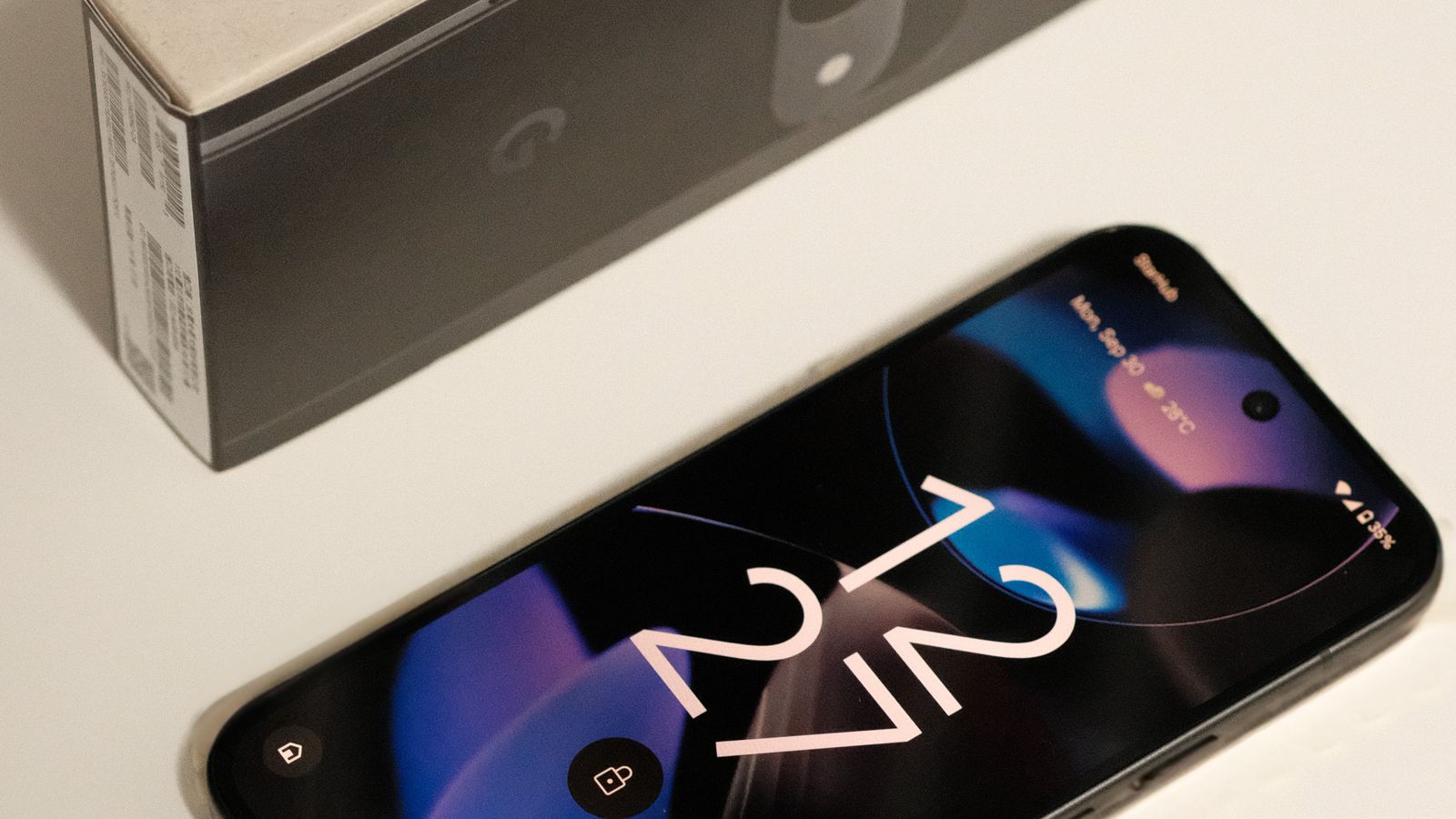
The Pixel 11 has been on sale since 20 August 2026, from £879 in the UK, and the change that matters most is the one the leaks pointed to: Google dropped the Samsung modem. Reviewers rate the new MediaTek modem as better and found the phone runs cooler too. Charging is still slow next to Samsung, and the Tensor G6 chip is 3nm, not the 2nm the leaks promised.
The quick answers:
Below: the launch facts and UK prices, what the new modem does in real use, the leaks that turned out wrong, and a straight buy call.
Google announced the Pixel 11, Pixel 11 Pro and Pixel 11 Pro XL on 12 August 2026. Pre-orders opened the same day, and the phones went on sale on 20 August. The Pixel 11 Pro Fold did not wait until October, as the leaks said. All four were on sale in August 2026.
These are the prices on Google’s UK store in October 2026:
| Model | Starting price (Google UK) | What you get at that price |
|---|---|---|
| Pixel 11 | £879 | 256GB, 12GB RAM. The 512GB model is £999. |
| Pixel 11 Pro | £1,079 | 256GB, 12GB RAM. 16GB of RAM starts at 512GB, for £1,199. |
| Pixel 11 Pro XL | £1,279 | 256GB, the bigger 6.8-inch screen |
| Pixel 11 Pro Fold | £1,799 | The foldable |
In the US, Google priced the first three from $899, $1,099 and $1,299. The Pixel 11, 11 Pro and 11 Pro XL all start at 256GB of storage, and Google promises seven years of Android and security updates.
One thing the price hides: the 256GB Pixel 11 Pro comes with 12GB of RAM. The Pixel 10 Pro had 16GB, so in the US you pay $100 more for 4GB less memory. For everyday use you will not notice. If you keep phones for five years, it is worth knowing.
For years the most common complaint about Pixel phones was not the camera or the screen. It was weak signal and battery drain, blamed on the Samsung-made modem. Before launch we said the modem swap was the real headline of this generation. The reviews say that was right.
The Pixel 11 range uses a MediaTek M90 modem. Google calls it “the most power-efficient modem ever on a Google Pixel”, but that comes from lab tests on pre-production phones, so here is what reviewers found in real use:
Not everyone is won over. When PhoneArena asked 543 readers what still bothered them about the Pixel 11 Pro, only 8.1% said the modem was enough to sell them on it. Most pointed at the price and the 12GB of RAM. So the modem fixes a real problem. It is just not a reason to replace a Pixel 10 that already works well for you.
The leaks said the Tensor G6 would move to TSMC’s 2nm process. It did not. It is made on TSMC 3nm, the same process as the Tensor G5. Google’s figures are modest: 25% faster web browsing, 15% quicker app launches and 50% more AI computing power than the G5.
Raw speed is still Tensor’s weak spot. Android Headlines found the Pixel 11 Pro well behind Samsung and OPPO flagships in benchmarks such as AnTuTu, and its graphics chip struggles with demanding games like Genshin Impact. If you play heavy games on your phone, look at a Galaxy instead. For everything else, the same review says the phone feels snappy, with no lag.
The camera changes are real. The standard Pixel 11 gets a new, larger 48-megapixel main sensor that Google says takes in 56% more light, and its 5x telephoto now reaches 30x Super Zoom. The Pro and Pro XL get a new main sensor and a redesigned 48-megapixel telephoto with 30% more light sensitivity, Portrait mode at 5x and Pro Zoom up to 120x. Google says Night Sight now takes its shots up to four and a half times faster.
The lights the leaks called Pixel Glow launched as HiLight. They are coloured LEDs around the camera flash. They glow when you talk to Gemini or when people you choose are calling, so you can leave the phone face down. Only the Pro and Pro XL have them, and Android Headlines calls them pretty limited for now. Do not pay for a Pro just for the lights.
Here is what Pixel owners kept asking for, against what the Pixel 11 delivered. The battery did not grow: the Pixel 11 Pro has 4,850mAh, a touch smaller than last year. Yet in Android Headlines’ testing the 11 Pro lasted longer than the bigger Pixel 10 Pro XL, which points to the new modem and the cooler chip. Android Authority’s reviewer usually went from 8am to 11pm with about 20% left.
| What Pixel owners asked for | What the Pixel 11 delivered |
|---|---|
| Drop the Samsung modem | Yes – a MediaTek M90, and reviewers report better signal |
| A phone that stays cool | Yes – 11 degrees cooler in Android Headlines’ stress test |
| A 6,000mAh battery | No – 4,850mAh on the Pro, though it lasts longer than last year’s |
| Much faster (60W+) charging | Partly – wired is still 30W on the Pro; wireless rises to 25W on the 11 and 11 Pro |
| Snapdragon-level raw performance | No – still behind rival flagships in benchmarks |
| Better camera sensors | Yes – a new 48MP main sensor on the Pixel 11, new main and telephoto sensors on the Pro models |
The one that still stings is charging: Android Headlines found the Pixel 11 Pro takes a little over an hour to charge fully, about 20 minutes longer than a Galaxy S26 Ultra.
It depends on the phone in your pocket now.
Buy the Pixel 11 if you have a Pixel 9 or older and weak signal, heat or battery drain have worn you down. That is what the new modem and the cooler running fix. Android Headlines puts it plainly: from a Pixel 9 Pro or older, the 11 Pro is worth the jump.
Keep your Pixel 10 if it works well for you. The upgrade is small, the Pro starts with less memory than the 10 Pro, and wired charging has barely moved. If you want a cheaper new Pixel, Google’s UK store sells the Pixel 10a alongside the 11 range.
And if you are open to switching, be objective: a Samsung Galaxy S26 Ultra charges faster and is much stronger for gaming. The Pixel’s case is still the software, the cameras and seven years of updates. If you are weighing Apple’s side of the fence, our iPhone 17 rundown and iPhone 18 guide lay it out.
It is already out. Google announced the Pixel 11, 11 Pro and 11 Pro XL on 12 August 2026, opened pre-orders the same day, and the phones went on sale on 20 August. Google lists the Pixel 11 Pro Fold as on sale in August too.
The modem. Google replaced the Samsung modem with a MediaTek one, and reviewers report better signal and less heat. Android Headlines measured about 10% faster speeds than a Pixel 10 Pro XL on the same network. The Tensor G6 chip and the HiLight lights on the Pro models are the other changes you will read about.
If weak signal, heat or battery drain bothered you on a Pixel 9 or older, get the Pixel 11, because that is what the new modem fixes. If you own a Pixel 10 that works well, the upgrade is small, and the 256GB Pixel 11 Pro has 12GB of RAM where the Pixel 10 Pro had 16GB.
Only wireless charging got faster. The Pixel 11 and 11 Pro now take 25W Qi 2.2 chargers, which only the XL did before. Wired charging on the Pixel 11 Pro is still 30W, and a full charge takes a little over an hour, about 20 minutes longer than a Galaxy S26 Ultra.
Tensor G6 is the chip in every Pixel 11. Google says it opens web pages 25% faster and apps 15% faster than the Tensor G5, with 50% more AI computing power. It is made on TSMC’s 3nm process, not the 2nm the leaks claimed, and it is still well behind Samsung and OPPO flagships in raw benchmarks.
On Google’s UK store in October 2026, the Pixel 11 starts at £879, the Pixel 11 Pro at £1,079, the Pixel 11 Pro XL at £1,279 and the Pixel 11 Pro Fold at £1,799. The Pixel 11, 11 Pro and 11 Pro XL all start with 256GB of storage.
Pixel Glow was the name in the leaks. Google launched the feature as HiLight: coloured LED lights around the camera flash on the Pixel 11 Pro and Pro XL. They glow when you talk to Gemini or when chosen contacts call, so you can leave the phone face down. The standard Pixel 11 does not have them.
Coming from a Pixel 9 or older, yes: the new modem, cooler running and longer battery life fix the problems that made those phones frustrating. From a Pixel 10, it is a harder sell. Only 8.1% of PhoneArena readers polled said the modem alone would win them over.
The Hardvance Team is the editorial team at Hardvance, a UK computer and electronics retailer based in Mildenhall, Suffolk. We build and upgrade PCs and sell laptops, phones, networking gear, monitors and printers, and our guides cover the same ground. Every guide names its sources and explains how we checked the figures, and we say plainly when something is our opinion rather than a tested result.
View all posts by Hardvance Team


No account yet?
Create an Account