AMD Ryzen CPUs in 2026: The Letter After the Number Matters More Than the Number
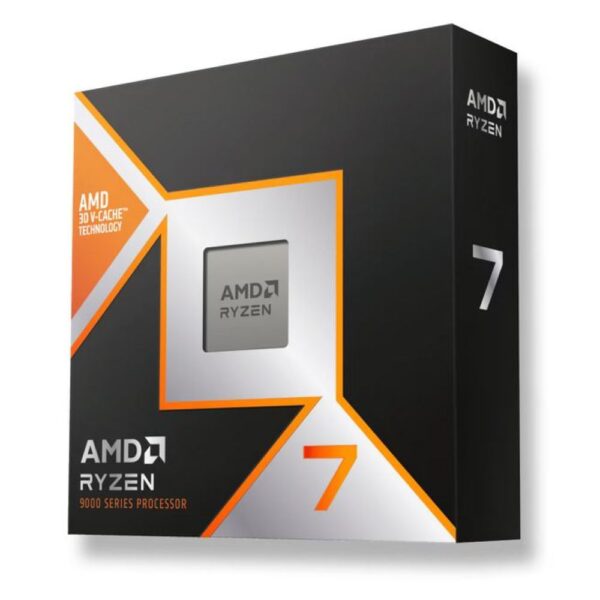
The letters on the end of a Ryzen tell you more than the number in front of it. For gaming, the Ryzen 7 9800X3D is still the chip to beat, and the Ryzen 5 7500X3D gets you most of the way there for under £239.02 inc VAT. A Ryzen 5 with X3D on the end will out-game a Ryzen 9 without it, every time.
Came here with a specific question? Straight answers:
- Fastest for gamesRyzen 7 9800X3D, or the 9850X3D, which is the same chip binned to run 400 MHz higher
- Best value gamingRyzen 5 7500X3D under £239.02 inc VAT or the Ryzen 7 7800X3D if you want eight cores
- Games and workRyzen 9 9950X3D, but read the CCD section first, because half of that chip has no extra cache
- All-rounderRyzen 7 9700X or the Ryzen 5 9600X: cool, quiet, no cache premium
- Cheapest way inRyzen 7 8700F or the Ryzen 5 7500F, with one catch we explain in the traps
- What do the letters meanX, X3D, F, G, GT and PRO all change what you get: the decoder is here
- Still on AM4Do not bin the board yet, see the AM4 section and our AM4 motherboard guide
Below: what 3D V-Cache actually does, why AMD flipped the cache to the underside of the chip and what that changed, the trap sitting inside every 16-core X3D processor, three Ryzens that look like bargains and are not, and why 95°C is not a fault.
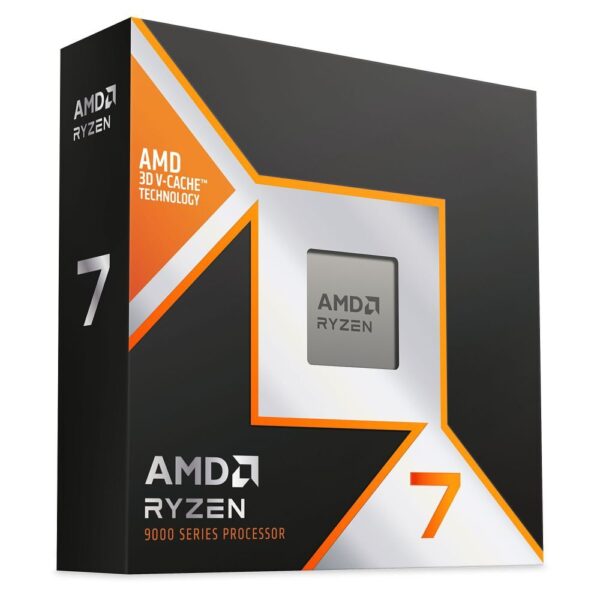
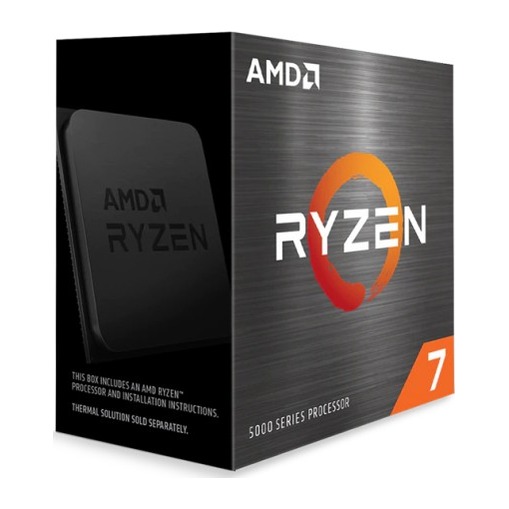
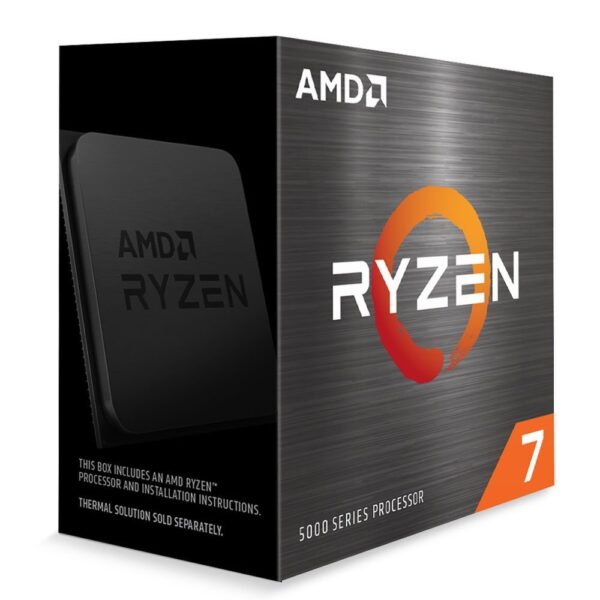
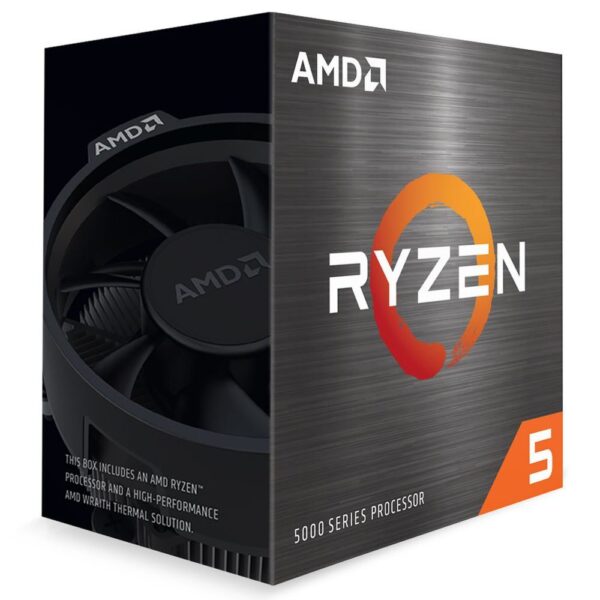
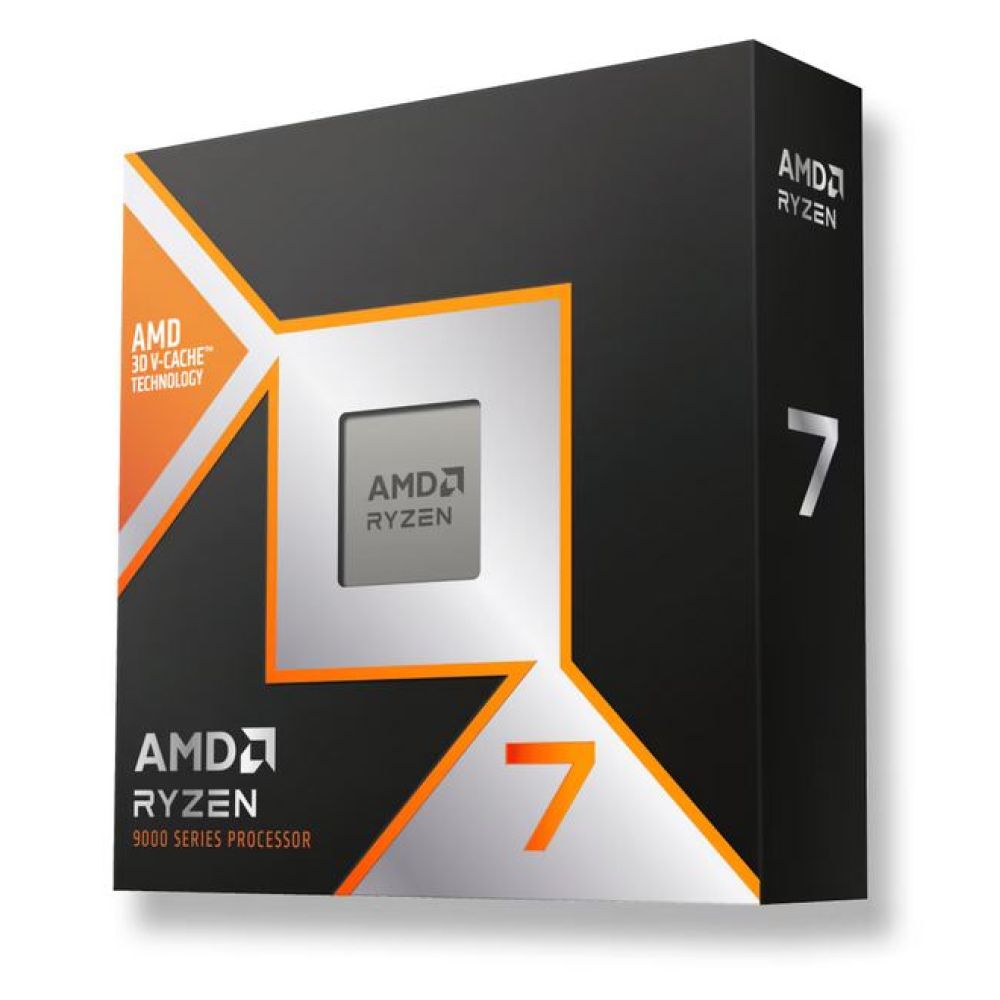
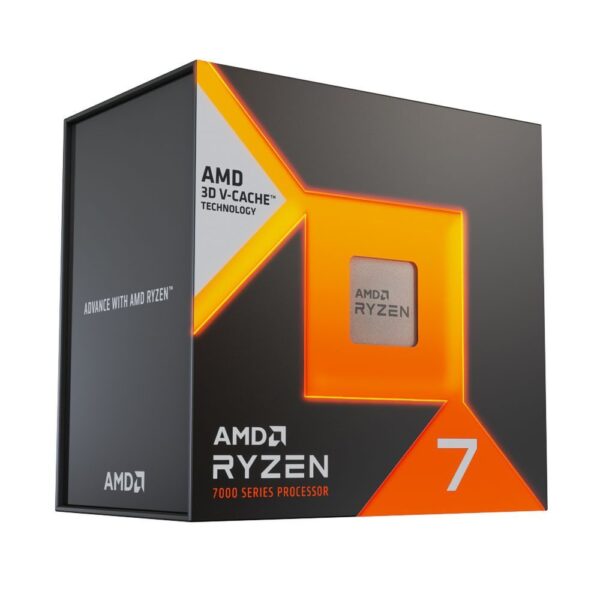
AMD Ryzen 7 9800X3D 4.7 GHz 96 MB Tray
In stock
£431.02 inc VAT- AMD Ryzen 7 9800X3D processor with 4.7 GHz base frequency
- 96 MB L3 cache with 2nd gen AMD 3D V-Cache™ technology
- 8 cores, 16 threads, 5.2 GHz boost frequency for gaming performance
- Socket AM5, 4 nm lithography, 120 W TDP
- DDR5-SDRAM support up to 192 GB, PCIe 5.0
Just show me the Ryzen to buy
Six chips cover almost every desktop build in 2026. Prices are live from our own shelves, so what you see is what it costs today, not what it cost when this was written.
Ryzen 5, 7, 9: the name, decoded
AMD writes the whole spec sheet into the model name. Once you can read it, half the buying decision is already made. Take the most searched chip on the internet right now, the Ryzen 7 9800X3D:
The catch most people miss: the first digit is the year AMD released the chip, not the technology inside it. The Ryzen 7 9800X3D is Zen 5. The Ryzen 7 8700G, which looks newer than a 7700X, is actually a laptop chip family (Zen 4) that AMD put in a desktop socket. Higher number, older core design, and it costs you PCIe lanes. More on that in the traps.
The letters are where the real money is:
| Suffix | What it means | Who it is for |
|---|---|---|
| X3D | An extra 64 MB slab of L3 cache stacked on the die. Massive in games, no help in Excel | Gamers. This is the only suffix that changes gaming performance in a big way |
| X | Higher boost clock and power limit than the plain chip. Usually a few percent for a lot more heat | People who want the last few frames and do not mind the fan noise |
| no letter | The efficient version. A Ryzen 7 9700X and a 7700 are the same silicon at different power limits | Quiet builds, small cases, anyone who values watts |
| F | No integrated graphics. Cheaper, and useless if you have no graphics card | Anyone fitting a real GPU on a budget |
| G | APU: a proper Radeon GPU inside the processor, strong enough for light gaming with no graphics card at all | Office boxes, media PCs, builds waiting for a GPU |
| GT / XT | A refreshed bin of an existing chip, slightly higher clocks | Nobody specifically. Buy on price against the non-T version |
| PRO | Same core, plus manageability and memory error correction features for business fleets | Workstations and IT departments |
A Ryzen 5 with X3D on the end will beat a Ryzen 9 without it in almost every game. The tier number sells cores. The suffix sells frames.
What 3D V-Cache actually does (and the change nobody talks about)
The pick: the Ryzen 7 9800X3D for the fastest gaming chip you can put in a normal PC, or the Ryzen 5 7500X3D if the budget stops at £239.02 inc VAT.
A game engine spends its life asking the same small pile of data for the same answers, thousands of times a second. If that data fits in the cache on the processor, the answer comes back in a few nanoseconds. If it does not fit, the processor has to go out to system memory, and that trip takes ten times longer. Every one of those trips is a frame you did not get.
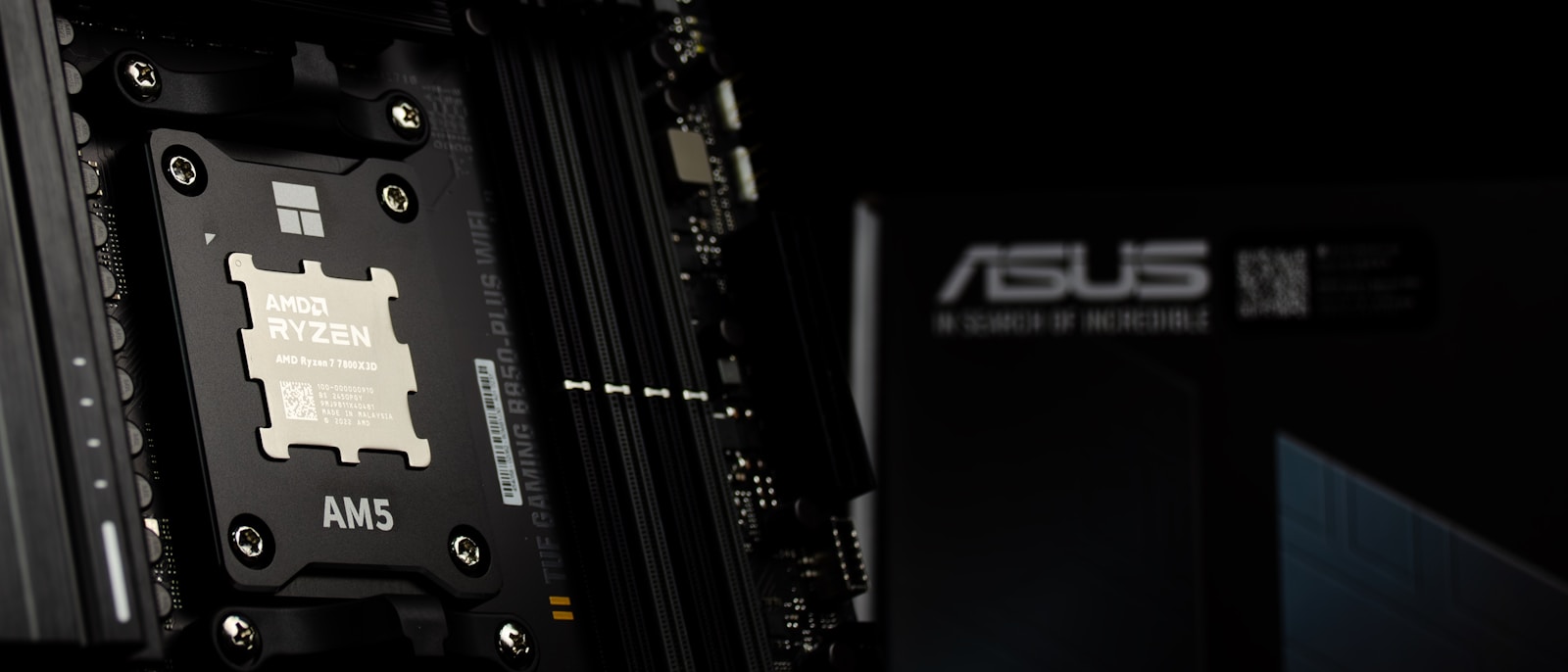
3D V-Cache is AMD stacking a second slab of silicon on the processor that does nothing but hold cache. A Ryzen 7 9700X has 32 MB of L3. A 9800X3D has 96 MB. That is why a chip with fewer cores and lower clocks beats a bigger, more expensive processor in games: the game stopped waiting on memory.
Here is the part most buyers have never heard. On the first two generations of X3D chips (the 5800X3D and the 7800X3D) the cache slab sat on top of the cores. That was a problem, because heat from the cores had to travel up through a layer of cache silicon before it reached the cooler. AMD had to cap the voltage and lock overclocking to keep those chips alive, which is why the 7800X3D clocks lower than a plain 7700X.
With the 9800X3D, AMD flipped it. The cache now sits underneath the cores, so the cores touch the heatspreader directly. Better heat transfer means higher clocks, and it made the 9800X3D the first X3D chip AMD ever allowed people to overclock. That single design flip, not a new manufacturing process, is why the 9800X3D was such a jump.
The Ryzen 7 9850X3D that arrived this year is not a new design at all. AMD says the cores and the cache are identical to the 9800X3D. It is simply a better bin of the same chip, sorted for silicon that will hold 5.6 GHz instead of 5.2 GHz. Same 96 MB, same 120 W, 400 MHz more headroom. If the price gap between the two is small on the day you buy, take the 9850X3D. If it is not, you are not missing much.
One thing X3D chips do not need is expensive memory. The huge cache makes them unusually relaxed about RAM speed, which is the whole point of our RAM for Ryzen X3D guide. Buy DDR5-6000 CL30 and spend the difference on the GPU.
The 16-core X3D trap: only half the chip has the cache
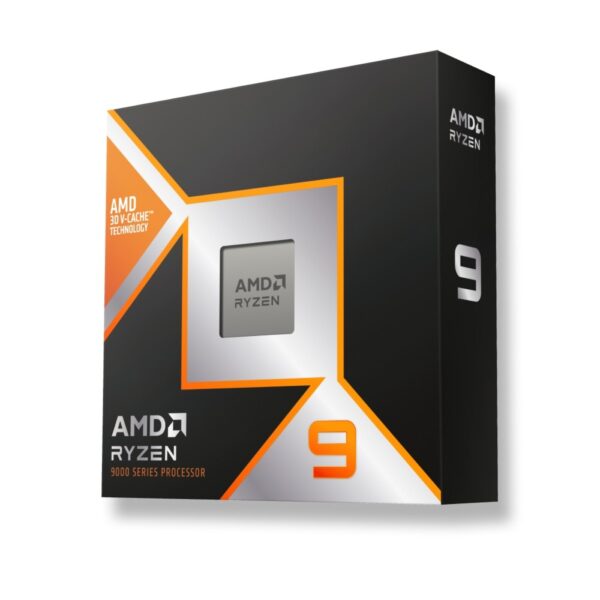
The pick: the Ryzen 9 9950X3D if you genuinely render, compile or stream, or the 9950X3D2 Dual Edition if you want the problem below engineered away. If you only game, the 9800X3D is the better buy and it is cheaper.
A Ryzen 9 is built from two clusters of cores, called CCDs, sitting on the same package. On the Ryzen 9 9950X3D, AMD stacks the extra cache on only one of those two clusters. Eight cores get 96 MB of L3. The other eight get 32 MB and clock higher instead.
So a game running on the wrong half of your processor loses the entire benefit you paid for. Windows has to work out, in real time, which threads belong on the cache cores and which belong on the fast cores, and then park the cores it does not want used.
Now the part that surprises everyone: the thing that tells Windows an application is a game is Xbox Game Bar. That is not a joke. The game detection sitting behind that overlay feeds the scheduler, and AMD ships a background service called the 3D V-Cache Performance Optimizer that acts on it. Uninstall Game Bar, or let that service fail to start, and a launcher or an emulator can end up running on the wrong CCD with none of the cache advantage. People have chased phantom stutter for weeks over this.
If you own a 9900X3D or a 9950X3D, three things are worth checking once:
Leave Xbox Game Bar installed. It is the game detector the scheduler relies on. Disable the overlay if it annoys you, but do not rip the app out.
Install AMD chipset drivers, and check the service is running. The 3D V-Cache Performance Optimizer service should be set to automatic. If it is stopped, the cores park wrongly and you lose frames for no visible reason.
Set CPPC preferred cores to Driver in the BIOS. That hands the decision to AMD software instead of a fixed guess in firmware.
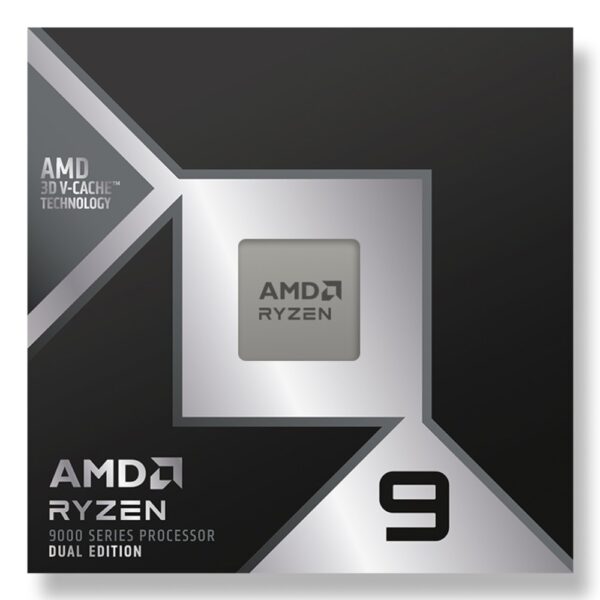
AMD finally solved this in silicon rather than software. The Ryzen 9 9950X3D2 Dual Edition is the first desktop chip with 3D V-Cache stacked on both clusters: 96 MB on each, 192 MB of L3 in total, so there is no wrong half to land on. It costs a lot more than a 9800X3D for a modest gaming gain, and it is aimed squarely at people who were sick of scheduler roulette on a 16-core chip.
For everyone else the honest advice has not changed: if the machine exists to play games, eight cache-rich cores beat sixteen mixed ones, and you keep the money.
Three Ryzens that look like bargains and are not
We sell all of these. We would still rather you bought the right one than sent the wrong one back.
The Ryzen 5 5500, which is not a cut-down 5600. It looks like the 5600 with a smaller number. It is a different chip entirely: a laptop-style monolithic die with the graphics switched off, half the L3 cache (16 MB instead of 32 MB), and PCIe 3.0 only. Put a modern graphics card in it and the card runs on last-generation lanes. In processor-limited gaming the 5600 is around 17 percent faster. The 5500 is only a bargain if it is genuinely much cheaper, and it usually is not.
The 8000-series F and G chips, which are laptop silicon in a desktop socket. The 8700F, 8700G, 8600G and 8400F are Phoenix APU dies. That means a graphics card gets a PCIe 4.0 x8 link instead of the full x16 that a 7700X or 9700X gives it, and there is less cache. For a light build, an office machine or a PC that games on the built-in Radeon graphics, they are excellent value. Pair one with a large graphics card and you have quietly handicapped the most expensive part in the case.
Tray versus boxed, which nobody explains at the till. A tray chip is the same processor, sold without the retail box and, crucially, without a cooler. That is why it is cheaper. On chips that ship with a Wraith cooler in the box, a tray version means budgeting for a cooler on top. On the X and X3D chips it changes nothing, because AMD does not include a cooler with those anyway.
To be clear about the F chips: the Ryzen 7 8700F at around £228.44 inc VAT is one of the cheapest eight-core processors you can buy anywhere, and for a mid-range card at 1080p the x8 link costs you very little. It is only when you bolt on a top-end GPU that the missing lanes start to bite. If you want a genuine full-fat budget chip with all sixteen lanes, the Ryzen 5 7500F is the one to look at instead.
Is AM4 finished?
The pick: if you already own an AM4 board, a used or discounted Ryzen 7 5700X3D or 5800X3D is still the cheapest meaningful upgrade in PC gaming. If you are starting from nothing, build on AM5.
AMD Ryzen 7 5700G 3.8 GHz (4.6 GHz Boost) Wraith Stealth
In stock
£198.68 inc VAT- AMD Ryzen 7 5700G processor with integrated AMD Radeon Vega 8 graphics
- 8 cores and 16 threads with Zen 3 architecture (Cezanne core)
- Base frequency 3.8 GHz, boosting up to 4.6 GHz
- Supports DDR4 3200 MHz memory in Dual Channel mode
- Compatible with AMD A520, B550, and X570 chipsets (AM4 socket)
- 65 W TDP with included Wraith Stealth cooler
- 16 MB L3 cache, 4 MB L2 cache, and 7 nm manufacturing process
AMD Ryzen 7 5800X 3.8GHz
In stock
£229.28 inc VAT- 8-Core, 16-Thread desktop processor based on the AMD Zen 3 architecture
- High frequencies of 3.8 GHz base and 4.7 GHz boost for demanding workloads
- 32 MB L3 cache plus 4 MB L2 cache for rapid data access and improved gaming performance
- Requires an AM4 socket motherboard, compatible with AMD B550 and X570 chipsets
- Supports DDR4 memory in Dual Channel mode, with speeds up to 3200 MHz
- 105 W TDP; does not include a bundled cooling fan
- Supports AMD-V and AMD-Vi virtualisation technologies
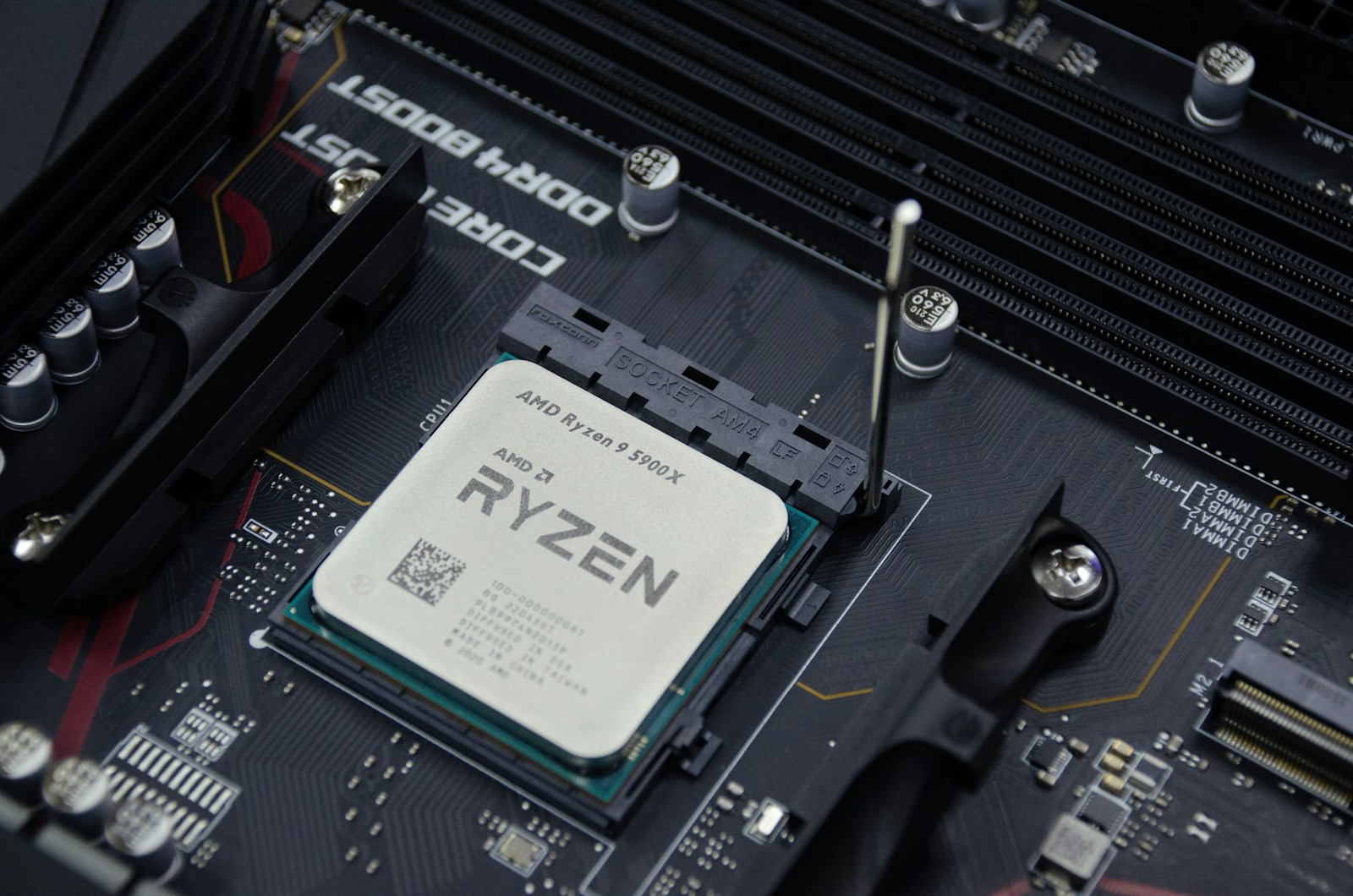
AM4 launched in 2016 and AMD is still shipping chips for it, which is close to unheard of. The socket ran from the first Ryzen 1000 all the way to the 5700X3D, so a board bought nine years ago can take a processor that still plays every current game at high frame rates.
That is the case for keeping it. The case against is everything around the processor: AM4 is DDR4 and PCIe 4.0, and the platform is done. Nothing new is coming. AM5 boards take DDR5, PCIe 5.0 and every chip in this article, and AMD has committed to the socket for years yet. If you are buying a board today, read our AM5 motherboard guide. If you are keeping the one you have, the AM4 guide covers what is still worth buying.
Why your Ryzen sits at 95°C, and why that is not a fault
Every week someone tells us their new Ryzen is broken because it hits 95°C under load. It is not broken. It is doing exactly what AMD designed it to do.
Modern Ryzen chips do not have a fixed clock speed. Precision Boost raises the clock until the processor runs into one of its limits: power, current, or temperature. On the 7000 and 9000 series, that temperature limit is 95°C, and the chip will happily sit against it. A better cooler does not lower the temperature much. It raises the clock speed instead, and the chip climbs back to 95°C at a higher frequency. That is the deal.
Two things are worth knowing:
Ryzen Master and Curve Optimizer. AMD’s free Ryzen Master tool (and the same settings in your BIOS under PBO) lets you apply a negative voltage curve. Less voltage at the same clock means less heat, which means the chip boosts higher for longer. It is the rare tweak that makes a processor faster and cooler at once. Start around minus 15 and test for stability, do not copy someone’s minus 30 from a forum: every chip is physically different and an unstable undervolt crashes at idle, not under load, which makes it maddening to diagnose.
X3D chips are the exception on temperature. The cache die does not like heat or voltage as much as the cores do, so X3D chips run to a lower ceiling and respond less to brute-force cooling. A good air cooler is enough. Our CPU cooling guide covers what actually helps.
Which Ryzen should you actually buy?
Match the chip to the job, not to the tier number.
| What you do | The chip | Why |
|---|---|---|
| Play games, high refresh rate | Ryzen 7 9800X3D or 9850X3D | Nothing in a normal socket is faster in games. Full stop |
| Play games, sensible budget | Ryzen 5 7500X3D | The cache is what wins frames, and this is the cheapest way to own it |
| Game and stream or edit | Ryzen 9 9950X3D | Sixteen cores for the work, cache for the game. Read the CCD section |
| Everything, quietly | Ryzen 7 9700X | 65 W, cool, quick, no cache premium |
| First gaming PC on a budget | Ryzen 5 7500F | Full PCIe x16, six modern cores, no wasted graphics you will never use |
| No graphics card at all | Ryzen 7 8700G | The built-in Radeon graphics genuinely play games at 1080p on low settings |
| Render, simulate, compile all day | Threadripper | When sixteen cores stop being enough and memory bandwidth is the wall |
And the honest counterpoint, because we would rather keep your trust than win one sale: if you already own a Ryzen 5 5600, a 5700X or anything newer, and you play at 1440p or 4K with a mid-range graphics card, your processor is almost certainly not what is holding you back. Spend the money on the GPU. Intel’s current Core Ultra chips are also perfectly good processors, they simply do not have an answer to X3D in games, which is why gaming PCs have leaned AMD for three generations now.
Quick answers
It means AMD has stacked an extra 64 MB of L3 cache onto the processor, taking a chip like the Ryzen 7 9800X3D from 32 MB to 96 MB. Games hammer the cache constantly, so the effect on frame rates is large. It does almost nothing for office work, video encoding or spreadsheets.
For a normal desktop, yes, along with its higher-clocked twin the 9850X3D. Chips with more cores exist and cost more, but in games they do not beat it in any way you would notice. If your PC exists to play games, the 9800X3D is the ceiling worth paying for.
Clock speed, and nothing else. AMD has confirmed the cores and the 3D V-Cache are identical. The 9850X3D is a better bin of the same silicon that boosts to 5.6 GHz instead of 5.2 GHz, with the same 96 MB of L3 and the same 120 W. Buy whichever is better value on the day.
F means no integrated graphics. You must have a graphics card. It saves you money if you were fitting a card anyway. Be aware that the 8000-series F and G chips also give a graphics card a PCIe 4.0 x8 link rather than the full x16, because they are built on AMD's laptop die.
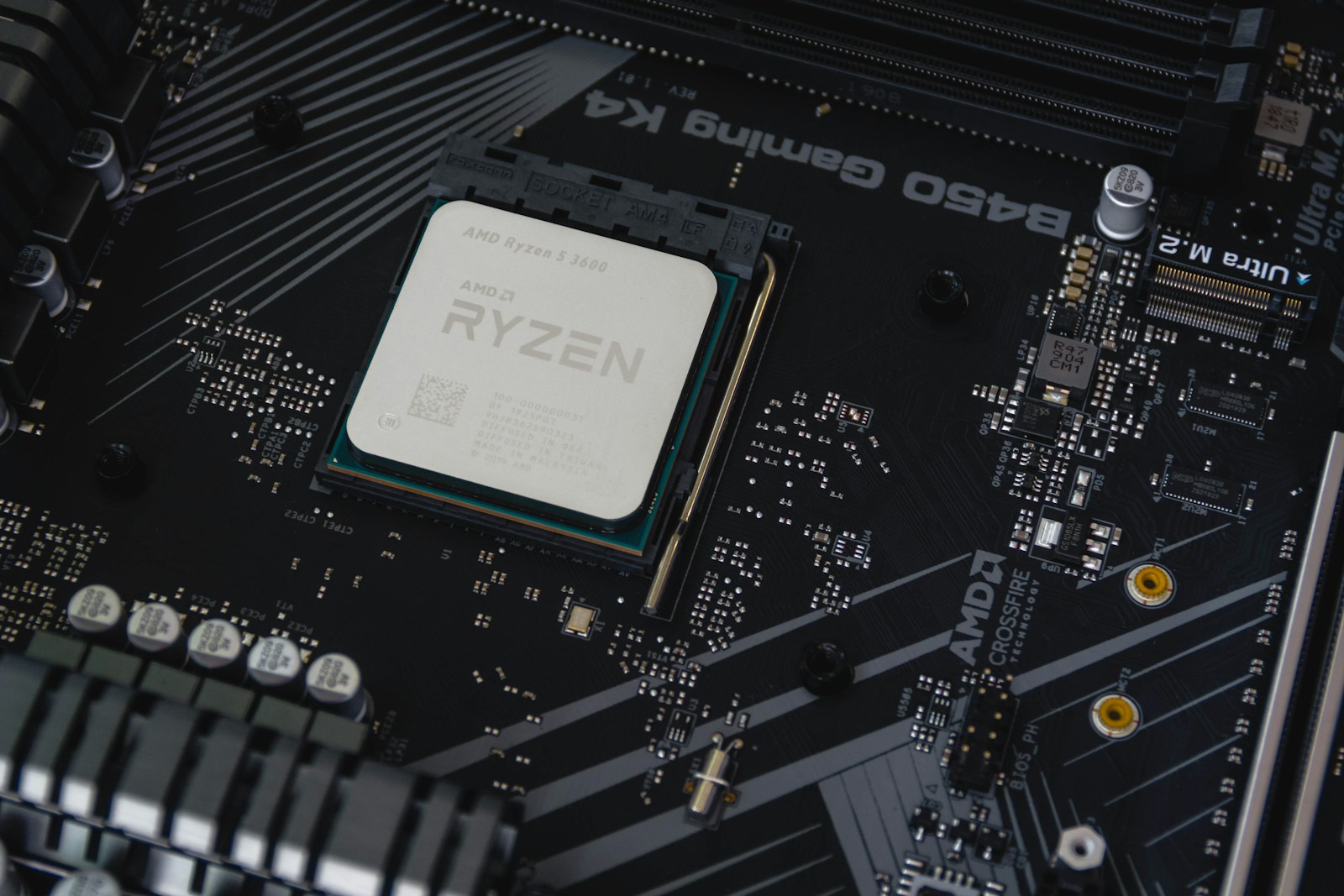
No. The tier number tells you roughly how many cores you get, not how fast the chip is. A Ryzen 5 7500X3D will out-game a Ryzen 7 9700X because it has the cache. A Ryzen 7 will beat a Ryzen 5 in work that uses every core, like rendering or compiling. Buy for the job.
Less than you think. At 4K the graphics card is usually the limit, so the gap between processors shrinks. The cache still helps in simulation-heavy games, and it protects your frame rate when you upgrade the GPU later, but if the budget is fixed, put the money in the graphics card first.
Because it is designed to. Precision Boost raises the clock speed until the chip meets a limit, and on modern Ryzen that limit is 95°C. It is not throttling in the damaging sense and it is not a defect. A better cooler mostly buys you higher clocks rather than lower numbers.
Ryzen Master is AMD's free tuning tool for Windows. Most people never need it. The one feature worth learning is Curve Optimizer, which undervolts the chip so it runs cooler and boosts higher at the same time. Change one thing, test it, and do not copy settings from a stranger's forum post.
It needs the AMD chipset driver installed, the 3D V-Cache Performance Optimizer service running, and Xbox Game Bar left alone, because that is what tells Windows an application is a game and therefore belongs on the cache-equipped half of the processor. Get that wrong and you paid for cache you are not using.
It is finished for new products but not useless. If you own an AM4 board, dropping in a 5700X3D or 5800X3D is still one of the best value upgrades in PC gaming. If you are building fresh, buy AM5: DDR5, PCIe 5.0, and years of upgrades still ahead of it.
Every AMD processor we stock, cheapest first, live prices:
How we know
Hardvance is a UK hardware retailer. We sell every processor named here, which is exactly why we have told you when not to buy one: the 8000-series lane limit, the CCD lottery on 16-core X3D chips and the 5500 cache cut are the three things that generate returns and unhappy customers. The technical claims are AMD's own specifications and independent review data, linked below, not our benchmarks. Prices on this page are pulled live from our stock, so they move.
Sources and further reading
- AMD: Ryzen 7 9850X3D specifications
- AMD: Ryzen 9 9950X3D2 Dual Edition
- TechPowerUp: Ryzen 7 9800X3D review (second-generation V-Cache placement and overclocking)
- TechPowerUp: Ryzen 9 9950X3D2 Dual Edition review
- Guru3D: Ryzen 5 7500X3D review
- Tom's Hardware: Ryzen 7 8700F and Ryzen 5 8400F specifications
- Tom's Hardware: Ryzen 5 5600 and 5500 review
Related guides
- Best Gaming CPU in 2026: Why Ryzen X3D Still Wins
- Best RAM for Ryzen X3D in 2026
- Best AM5 Motherboard in 2026
- Best AM4 Motherboard in 2026: The Dead Socket That Refuses to Die
- CPU Cooling in 2026: Air vs AIO and X3D Temperatures
- How to Build a PC in 2026: Step by Step
- How to Choose PC Components in 2026
- X870 vs X870E: The E Is a Second Chip, Not a Speed Boost
About Hardvance Team
The Hardvance hardware team builds, upgrades and troubleshoots custom PCs every day. Our buying guides are practical and free of hype, drawn from hands-on experience across AMD and Intel platforms, and focused on the parts that genuinely matter for your build and your budget.
View all posts by Hardvance Team