iPhone 17 in 2026: Is It Worth It, or Should You Wait for the 18?
The iPhone 17 is the biggest jump Apple has given its standard phone in years. The headline is the screen: a 6.3-inch 120Hz ProMotion display, after the iPhone 16 spent its whole life stuck at 60Hz. Add a real 48MP ultrawide, faster 25W charging and double the starting storage, all at the same £799, and it is a proper upgrade rather than a token one. Whether you should buy depends on what you hold now and on one fact most people miss: the standard iPhone 18 is not due until spring 2027.
Find your situation:
- On an iPhone 16The 120Hz screen is the one thing you feel every day. Worth it if that matters to you; not urgent otherwise.
- On iPhone 14 or olderYes. Screen, cameras, chip and charging are all a clear step up.
- Thinking of waiting for the 18For a standard model, do not: it slips to spring 2027. Only the Pro, Pro Max and the first foldable arrive in September 2026.
- Which one to getThe plain 17 suits most people; the Air if you want thin and light; Pro for cameras; the 17e to spend less.
We stock the current iPhones, so the picks here are ours, but the verdict is the honest one, including when the cheaper phone is the smarter buy. Here is what actually changed, what you will and will not notice, and when waiting makes sense.
What actually changed from the iPhone 16
Most years the standard iPhone gets a new chip and little else. This year is different, and the difference you notice first is the one Apple held back for the longest.
The screen finally moves. The iPhone 17 has a 6.3-inch Super Retina XDR panel with ProMotion, an adaptive refresh rate up to 120Hz and an always-on mode, peaking at 3,000 nits. The iPhone 16 ran at a flat 60Hz. If you have ever picked up a Pro model and wondered why scrolling looked so smooth, that is what has now reached the regular phone. It is the single change you will feel every time you use it.
The ultrawide camera grows up. Both phones keep a 48MP main camera, but the iPhone 17 pairs it with a 48MP ultrawide, up from the 16’s 12MP. That is a real jump in detail and low-light ultrawide shots, not a spec-sheet trick. The front camera goes to an 18MP Center Stage sensor (from 12MP) that widens the frame automatically for group selfies.
It charges noticeably faster. MagSafe charging rises to 25W, so you get roughly 0–50% in about half an hour, where the 16’s 15W needed closer to 45 minutes.
Under the glass. The A19 chip (6-core CPU, 5-core GPU, 16-core Neural Engine) with 8GB of RAM handles everything current, a new N1 wireless chip brings Wi-Fi 7 and Bluetooth 6, and a vapour-chamber cooling system keeps it from throttling during games or heavy AI tasks. The front is tougher Ceramic Shield 2, which Apple rates at three times the scratch resistance of before. And the base model now starts at 256GB, double the old 128GB, for the same money.
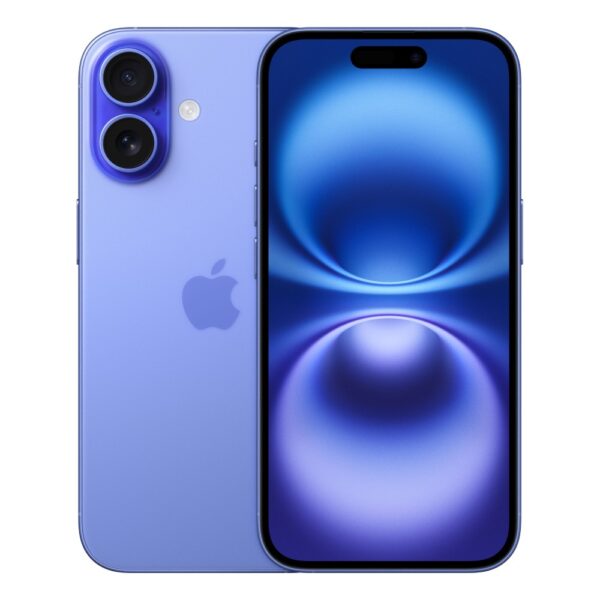
The five upgrades over the iPhone 16 that people actually notice, same £799 starting price. Blue is the iPhone 17.
Should you upgrade from an iPhone 16?
Upgrade or not? It is not a straight yes. If you are on an iPhone 16, everything works, and the one change worth upgrading for is the 120Hz screen. Spend two minutes with a 17 and then go back to your 16, and the 60Hz scrolling suddenly looks a step slower. If that bothers you, this is your upgrade. If it does not, the 16 remains an excellent phone and you are not missing much day to day.
Coming from an iPhone 14 or older, it is a much easier call. You get the 120Hz screen, a far better camera system, a big chip and battery jump, faster charging and USB-C in one go. That is a genuine generational leap.
Because the 17 is out, the iPhone 16 is now cheaper, especially refurbished. If budget is the priority and you do not care about ProMotion, a good refurbished 16 is the value play, and it will still get years of software updates.
One caveat worth stating plainly: this guide assumes you have already settled on iPhone. If you have not, the honest rivals at this price are the best Android flagships, the Samsung Galaxy S series and Google Pixel, which trade blows with the iPhone on screen and camera. Weigh it against those before you commit to the ecosystem.
| iPhone 17 | iPhone 16 | |
|---|---|---|
| Display | 6.3″, 120Hz ProMotion, always-on, 3,000 nits | 6.1″, 60Hz, 2,000 nits |
| Main / Ultrawide | 48MP + 48MP | 48MP + 12MP |
| Front camera | 18MP Center Stage | 12MP |
| Chip | A19, 8GB RAM | A18, 8GB RAM |
| MagSafe charging | 25W | 15W |
| Base storage | 256GB | 128GB |
| Front glass | Ceramic Shield 2 | Ceramic Shield |
| Launch price | £799 | £799 (at launch) |
The 2026 lineup: which iPhone 17 is which
Apple reshuffled the range this year, and the biggest change is that the Plus is gone. In its place sits the iPhone Air, and there is a new budget model too. From cheapest to dearest:
iPhone 17e (from £599) is the affordable entry. It brings the A19 chip and the core experience down to the lowest price in the range, with compromises on the extras rather than the essentials.
iPhone 17 (from £799) is the one most people should buy: the 6.3-inch 120Hz screen, the dual 48MP cameras and 256GB of storage cover almost everyone.
iPhone Air (from £999) replaces the Plus and is the thinnest iPhone Apple has made, with a larger 6.6-inch display in a lighter frame. It is the pick if you value how a phone feels in the hand over having the most cameras.
iPhone 17 Pro and Pro Max sit at the top for people who want the full camera system, the brightest displays and the most performance headroom. If photography or video is the reason you are buying, this is where to look; for everyone else the plain 17 gives you most of the experience for a lot less.
Whichever way you lean, three we keep in stock hit the value sweet spots: the iPhone 17e for the cheapest way into the current generation, and the iPhone 16 and iPhone 15 as the last-generation picks that still do everything most people need for less. You can browse every iPhone we stock too.
Apple iPhone 16 128GB Ultramarine
In stock
£705.17 inc VAT- 6.1-inch Super Retina XDR OLED display with 460 ppi, Ceramic Shield and Dynamic Island
- Apple A18 chip with 6-core CPU, 5-core GPU and 16-core Neural Engine
- Dual 48 MP and 12 MP rear cameras with 4x optical zoom, OIS and 4K HDR video
- 128 GB internal storage, no memory card support
- 5G, Wi-Fi 7, Bluetooth 5.3, USB‑C, NanoSIM + eSIM and IP68 water resistance
- iOS 18 with Apple Intelligence, Apple Siri, wireless charging and 22 h video playback
Should you wait for the iPhone 18?
This is where a fact most buyers do not know changes the answer entirely. Apple is splitting the iPhone 18 range across two launches. The iPhone 18 Pro, Pro Max and Apple’s first foldable are expected in September 2026, but the standard iPhone 18 has reportedly slipped to spring 2027. None of this is official yet, so treat it as well-sourced rumour rather than fact.
What that means for you is simple. If you want a standard iPhone, there is no point waiting: the next one is most of a year away, and buying a 17 now gets you a current phone that will be supported for years. If you specifically want a Pro, or you are intrigued by the foldable, then holding until September 2026 is reasonable, because that is when the interesting hardware lands.
For the curious, the iPhone 18 Pro rumours point to an A20 Pro chip, Apple’s own C2 modem, a smaller Dynamic Island, a variable-aperture main camera, a 24MP selfie sensor, 12GB of RAM and an iOS 27 overhaul of Siri now said to be powered by Google Gemini. We track the details as they firm up in our iPhone 18 guide, and the foldable in our iPhone Fold rundown.
Common questions
Yes, more than usual for a standard iPhone. The main reasons are the 6.3-inch 120Hz ProMotion display (the 16 was 60Hz), a 48MP ultrawide (up from 12MP), 25W charging (up from 15W) and 256GB of base storage, all at the same launch price. The 120Hz screen is the change you notice most.
The plain 17 covers the essentials: the 120Hz screen, dual 48MP cameras and a fast chip. The Pro and Pro Max add a fuller camera system, brighter displays and more sustained performance. If photography or video is your priority, the Pro is worth it; otherwise the standard 17 gives most people the same everyday experience for less.
It depends on the model. The standard iPhone 18 has reportedly been pushed to spring 2027, so if you want a regular iPhone there is no reason to wait. Only the iPhone 18 Pro, Pro Max and the first foldable are expected in September 2026, so waiting only makes sense if you specifically want one of those.
The iPhone Air replaces the old Plus model. It is the thinnest and lightest iPhone Apple has made, with a larger 6.6-inch display. You choose it for the design and feel rather than for having the most cameras, which remain the Pro models’ strength.
Yes, especially refurbished now that it has dropped in price. It handles everyday use just as well; you mainly give up the 120Hz screen, the higher-resolution ultrawide and faster charging. If ProMotion does not matter to you, a good refurbished 16 is the value pick and will still receive years of updates.
Yes. The standard iPhone 17 has ProMotion with an adaptive refresh rate up to 120Hz and an always-on display, features that were previously reserved for the Pro models. It is the biggest single reason to choose it over the iPhone 16.
256GB. Apple dropped the old 128GB entry tier, so the base iPhone 17 now starts at double the storage of the base iPhone 16 for the same launch price of £799.
The A19, with a 6-core CPU, a 5-core GPU and a 16-core Neural Engine, paired with 8GB of RAM. It also uses Apple’s new N1 wireless chip for Wi-Fi 7 and Bluetooth 6, and a vapour-chamber cooling system to hold performance during demanding tasks.
Related reading
- iPhone 18: release date, specs and every leak that matters
- iPhone Fold: Apple’s first foldable, explained
- Which MacBook should you buy in 2026?
- Best wireless earbuds in 2026
- Google Pixel 11: the Android alternative, and its one real upgrade
- ChatGPT Images 2.0: the generator that thinks before it draws
Sources
- iPhone 17 specs: Apple technical specifications; MacRumors roundup; GSMArena full specifications.
- iPhone 17 vs 16: Macworld; Trusted Reviews.
- iPhone 18 split launch and rumours: Macworld; Tech Advisor.
About Hardvance Team
The Hardvance hardware team builds, upgrades and troubleshoots custom PCs every day. Our buying guides are practical and free of hype, drawn from hands-on experience across AMD and Intel platforms, and focused on the parts that genuinely matter for your build and your budget.
View all posts by Hardvance Team