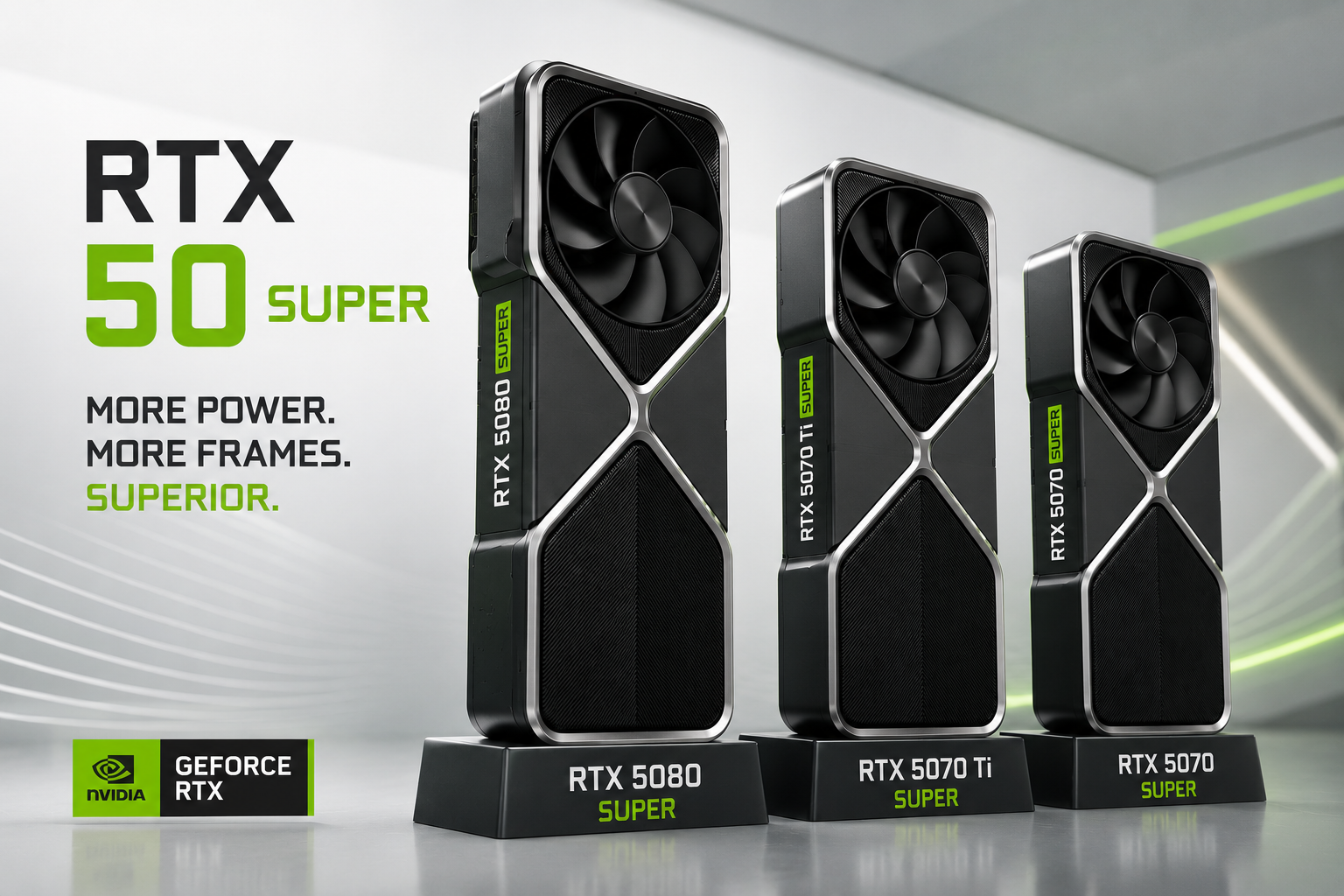
RTX 5080 Super Release Date: 5070 Ti Super and 5070 Super Are Ready, But the Launch Is On Hold
Three refreshed cards are coming: the RTX 5080 Super, RTX 5070 Ti Super and RTX 5070 Super. Board partners already have them, but NVIDIA has the launch on hold over memory supply, so there is still no release date. The headline change is memory: 24GB, 24GB and 18GB, roughly 50 percent more than the cards they replace. Speed changes look modest. The memory is the story.
The quick answers:
- Release dateNone yet. Built, but held back over 3GB GDDR7 supply. Why, and what to do
- What actually changesMemory, mostly. The spec table
- Wait or buy now?Depends on the card you own. Your answer
- What will they cost?Our pricing read, including the memory-market catch
- Be first on launch dayBookmark the stock pages: 5080 Super, 5070 Ti Super, 5070 Super
Why this refresh is really about memory, and the honest wait-or-buy call for every card you might own right now: below.
RTX 5080 Super release date: the cards are built, but the launch is on hold
There is still no release date. As of 21 September 2026, NVIDIA board partners already have the RTX 50 Super silicon in hand, but head office has put the launch on hold. The summer came and went without a launch, and the quarter everyone pencilled in, Q3 2026, ends on 30 September.
The hold is about memory, not the chips. These cards were designed around denser 3GB GDDR7 modules. That is how the RTX 5070 Super reaches 18GB, and how the 5070 Ti Super and 5080 Super both reach 24GB. The catch is that the same 3GB modules go into NVIDIA AI cards such as the RTX PRO 6000 Blackwell and Rubin CPX, and supply is nowhere near demand. Given that choice, NVIDIA is serving the higher-margin AI business first.
So what does that mean for you? For now you are choosing from the regular RTX 50 cards, which use the more common 2GB modules, and nobody can give you a date for the Supers. If you need a card this quarter, buy the one that suits your budget today rather than waiting for a launch that has no date on it.
One more thing before you plan a build around a Super. They look thirstier. The Seasonic PSU calculator lists the 5080 Super at 415W against the 5080 at 360W, the 5070 Ti Super at 350W against 300W, and the 5070 Super at 275W against 250W. The extra memory is doing that. If you are picking a power supply now, leave yourself headroom and start with our ATX 3.1 power supplies.
The short history: board partners originally expected a reveal around CES 2026 with cards following in spring. That window slipped. Reports then described partners still waiting on final specifications, and for a while there was talk that the refresh might be shelved entirely. The working window then settled on Q3 2026. That quarter ends on 30 September and nothing has launched, so the window is about to close empty. Worth knowing where the hold came from: The Information reported that NVIDIA managers told employees and suppliers in December that the company was delaying the refresh “without offering a new timeline”, citing the global memory shortage and the need to feed its AI chip business first. Postponed rather than cancelled remains the most consistent account, but there is still no replacement date from anyone.
The honest caveat we attach to every pre-launch page: none of this is official until NVIDIA says it on stage. Dates from leaks move. We update this article and the stock pages linked above whenever the picture firms up.
A note on the RTX 50 Super 2027 searches you may have seen: that confusion has two roots. Early reports had this refresh sliding as far as 2027 before the window settled on Q3 2026, and the next full generation, the RTX 60 Series, was until today a 2027 story. It is not any more. On 21 September 2026 the leaker kopite7kimi, who had previously placed it in the second half of 2027, said of the Rubin-based GR20x gaming family: “Unfortunately, GR20x is a product from 2028. That means they have postponed again.” A second leaker, Kepler_L2, has said the same about NVIDIA’s next gaming generation and most of AMD’s next discrete cards. NVIDIA has announced nothing officially, so treat 2028 as the current best guess rather than a date. What it does mean is that the Supers are no longer a short wait ahead of a nearby generation: with the launch on hold you cannot rule out a slip into 2027, and there is now nothing credible behind them until 2028.

Specs: what changes on each card
Memory goes up by half on all three cards. That is the refresh. Clock-speed changes look small in every credible report, so treat these as the same GPUs with the memory criticism fixed.
| Card | Memory today | Super memory (reported) | The card it replaces |
|---|---|---|---|
| RTX 5080 Super | 16GB (RTX 5080) | 24GB | RTX 5080 |
| RTX 5070 Ti Super | 16GB (RTX 5070 Ti) | 24GB | RTX 5070 Ti |
| RTX 5070 Super | 12GB (RTX 5070) | 18GB | RTX 5070 |
The odd-looking numbers come from the memory chips themselves: the refresh is expected to use 3GB GDDR7 modules in place of 2GB ones, which turns a 16GB card into 24GB and a 12GB card into 18GB without redesigning the board. One card is notably absent from every credible report: there is no sign of an RTX 5090 Super. At 32GB, the 5090 has no memory problem to fix.
Why the memory bump matters more than clocks
Because memory is the thing that ages a graphics card in 2026, not speed. Modern releases at high settings, path tracing, frame generation and local AI tools all eat video memory before they run out of GPU grunt.
We said it plainly in our graphics card guide: do not buy 8GB in 2026, and 12GB is the floor for serious 1440p. The 5070 Super moving to 18GB removes the one real criticism of that card. The 24GB on the two bigger Supers takes 4K, heavy modding and AI work off the worry list for years.
A GPU rarely becomes too slow before it becomes too small. The Super refresh fixes the size, which is exactly why it is worth waiting for if you can.
Wait or buy now? By the card you own today
The rule of thumb: if your current card still runs your games at your resolution, wait. If you need a card this month, buy the current one and do not look back. Here is the specific version:
- On an RTX 30-series or older, gaming at 1440p: you have waited this long, but the launch is on hold with no date attached. Hold out for the 5070 Ti Super if you can, or buy a 5070 Ti today if the PC is needed now. Both are excellent.
- On an RTX 40-series at 4K: the 5080 Super’s 24GB is the card your resolution wants. Worth the wait.
- Building a whole PC now: build now with a current card. A PC in the hand beats a rumour with no date on it, and our gaming PC guide covers the sensible splits.
- Eyeing the RTX 5090: nothing changes for you. No 5090 Super is credibly reported, and the 5090 remains the top card.
- Happy on a 50-series card today: skip the Supers entirely. The RTX 60 Series is now reported for 2028, so your card has longer to live than it looked a week ago.
The current cards
Every RTX 5080, 5070 Ti and 5070 we sell. These are the cards the Supers will replace, and the ones to buy if you need a GPU today.
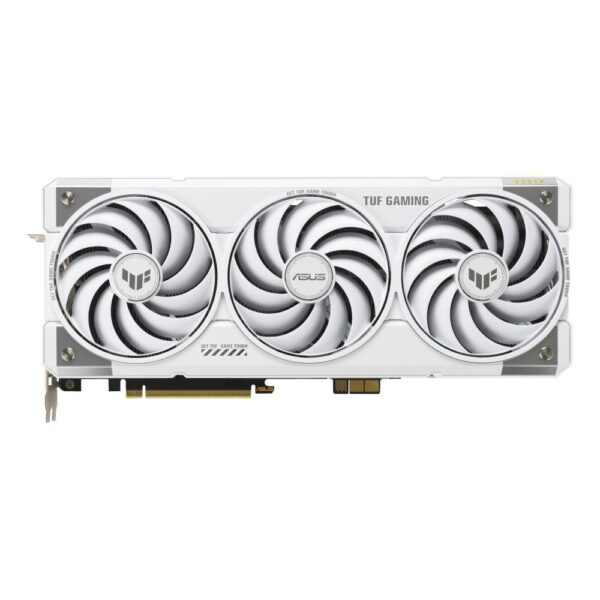
ASUS TUF RTX 5070 Ti 16GB White Edition
In stock
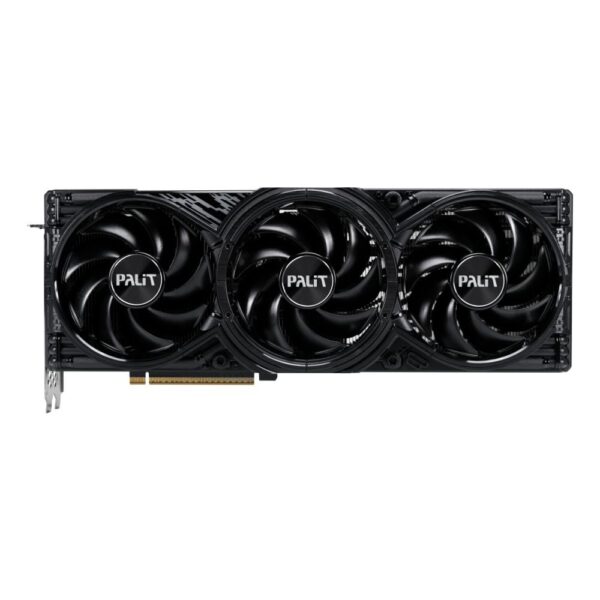
Palit GeForce RTX 5080 GamingPro V1 16GB GDDR7
In stock
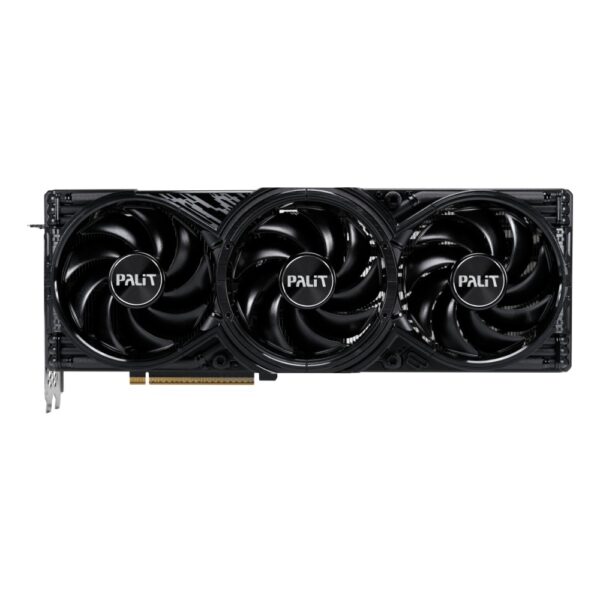
Palit GeForce RTX 5080 GamingPro OC Graphics Card 16 GB GDDR7 PCIe 5.0 Black
In stock
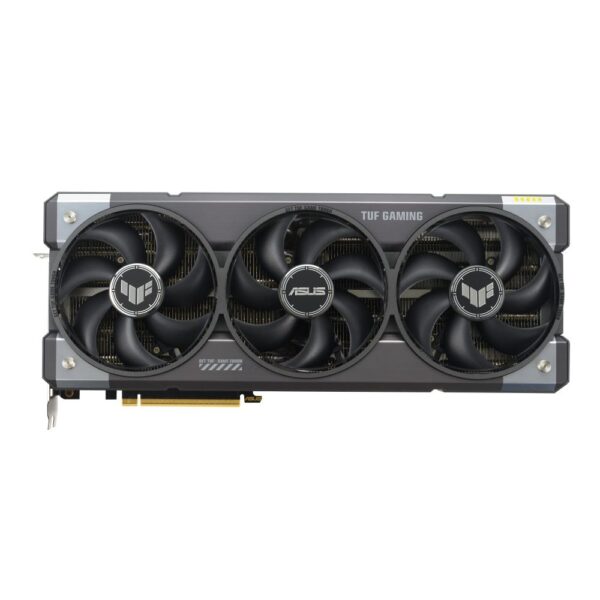
ASUS TUF Gaming RTX 5080 16GB Graphics Card
In stock
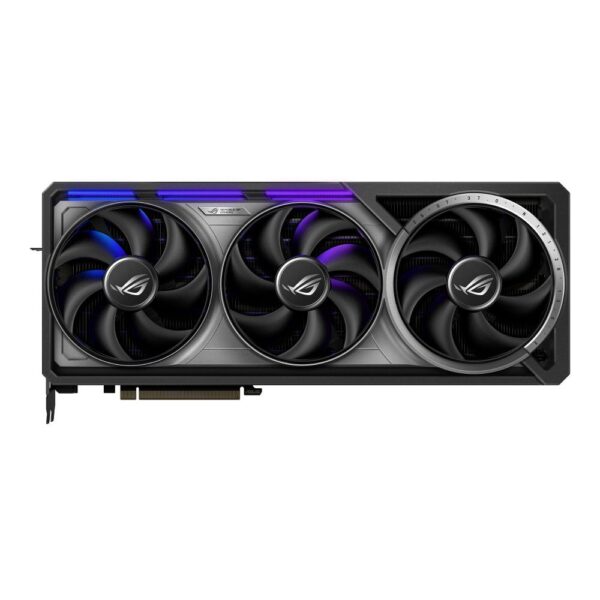
ASUS ROG Astral RTX 5080 16GB Gaming
In stock
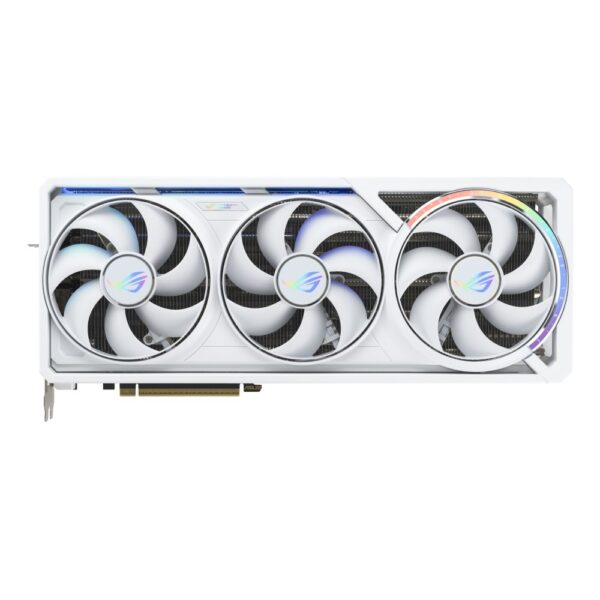
ASUS ROG Astral GeForce RTX 5080 16GB GDDR7 White
In stock
What will the Super cards cost?
Our read: close to the prices the current cards launched at, with the usual UK translation, and one genuine risk pushing the other way. NVIDIA’s Super refreshes have historically landed at or near the outgoing card’s price and pushed the older model down. That is the good scenario, and it is the common one.
The risk is the memory market. Memory prices have been climbing hard through 2026, as we covered in our RAM and SSD price piece, and these cards exist precisely to carry 50 percent more of it. If the squeeze continues into launch, do not be surprised by a premium over the cards they replace, or by tight stock in the first weeks. Which is exactly why the stock pages below are worth a bookmark.
One practical note while you plan: a Super card will not need a new power supply over its non-Super twin. If your unit runs a 5080 class card comfortably, you are set; if you are unsure, our PSU guide settles it in two minutes.
And a word on the RTX 50 Super pricing leaks people search for: as of July 2026 no credible pricing leak exists. Every number floating around is a guess. When a real one surfaces, we will weigh it here the same day.
How to be first in line when they land
We keep a product page for each Super card, and they fill up the day the cards arrive. They already carry the release windows, the reported specs and the answers above, and they will list every model we sell from launch morning:
Bookmark the one you want. On launch morning that page is faster than searching, and history says the first allocation of a popular Super card does not hang around.
Quick answers
There is no date. Board partners already have the cards, but in July 2026 NVIDIA put the launch on hold, because the denser 3GB GDDR7 memory the Supers need is going to its AI products first. The working window had been Q3 2026, and that quarter closes on 30 September with nothing launched. Until NVIDIA says otherwise, treat any date you read as a rumour.
The consistent reports say 24GB of GDDR7, up from 16GB on the RTX 5080, using 3GB memory modules, with only modest clock changes. Think of it as a 5080 with the memory worry removed rather than a new tier of performance.
No credible report points to one. The RTX 5090 already carries 32GB, so it has no memory gap for a Super refresh to fix, and every leak covers only the 5070, 5070 Ti and 5080 refreshes.
Historically yes: Super refreshes tend to land near the outgoing price and push the older card down. This cycle has a caveat, because rising memory prices could blunt the discounts. If a current card drops sharply near launch, that is your bargain window.
On paper yes, because 18GB removes the 12GB limitation that was the RTX 5070's only real weakness. The catch is that the wait now has no end date while the launch sits on hold. If you need a card now, the 5070 Ti with 16GB is the safer buy today.
Almost certainly not. Reports placed the RTX 60 Series on the Rubin architecture in the second half of 2027, but on 21 September 2026 the leaker kopite7kimi moved it to 2028, and a second leaker has said the same. That is more than two years away. Waiting a quarter for the Supers was reasonable. Waiting two years with no confirmed date at all is a long time to be unhappy with your frame rate.
It is likely now. The plan was Q3 2026, that quarter is ending, and the launch is still held back over memory supply, so a slip into 2027 is the sensible assumption. Separately, the 2027 date you often see belonged to the next full generation, the RTX 60 Series on the Rubin architecture. As of 21 September 2026 that one has been pushed again, to 2028.
Not yet. As of July 2026 no pricing leak has held up, and history says Super refreshes land near the outgoing card’s price. The memory-market squeeze is the one factor that could push this cycle higher.
How we track this
Hardvance is a UK retailer. We sell and support GeForce cards daily, we talk to distributors about allocations, and we maintain the stock pages linked above. Pre-launch details here come from consistent, named industry reporting and are labelled as expectations, not promises. When NVIDIA confirms details, this page changes the same day.
Sources and further reading
- TechPowerUp, 17 July 2026: board partners have the RTX 50 Super, but GDDR7 pricing holds the launch
- TechPowerUp: partners awaiting final RTX 50 Super specifications
- Notebookcheck: RTX 50 Super delayed, not cancelled
- Tom’s Hardware: desktop GPU roadmap
- VideoCardz, 21 September 2026: GeForce RTX 60 reportedly delayed to 2028, another leaker confirms. The source for the kopite7kimi quote, for GR20x being the Rubin-based gaming family, and for NVIDIA having announced no consumer Rubin lineup, names or launch date.
- VideoCardz: RTX 50 SUPER pushed back, RTX 60 mass production could move to 2028, reporting The Information on NVIDIA delaying the refresh in December without offering a new timeline.
About Hardvance Team
The Hardvance Team is the editorial team at Hardvance, a UK computer and electronics retailer based in Mildenhall, Suffolk. We build and upgrade PCs and sell laptops, phones, networking gear, monitors and printers, and our guides cover the same ground. Every guide names its sources and explains how we checked the figures, and we say plainly when something is our opinion rather than a tested result.
View all posts by Hardvance Team